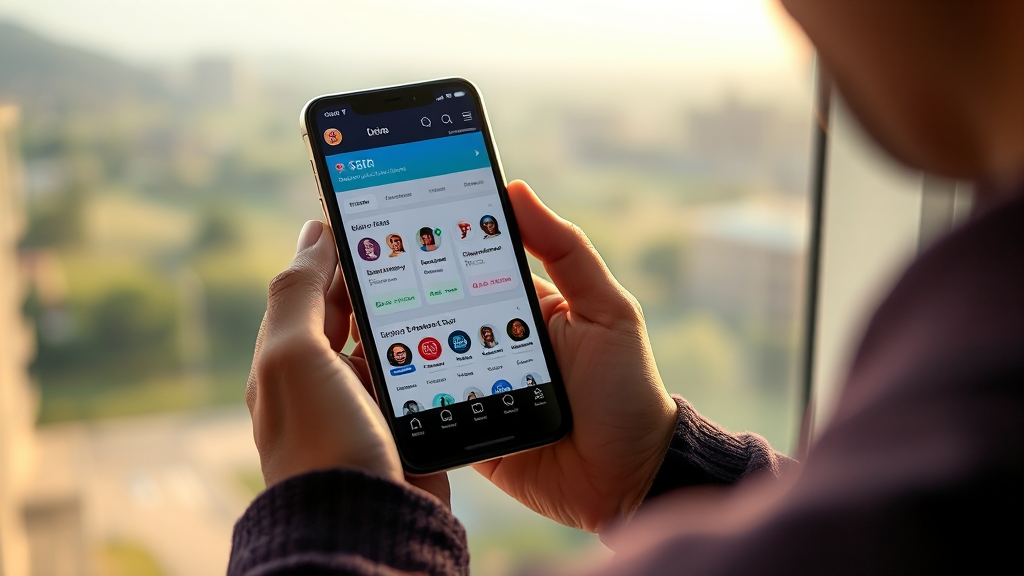
Getting tk999 at a Comfortable Pace: A Guide for Older Users
Getting tk999 at a Comfortable Pace: A Guide for Older Users
If you did not grow up with app stores, the whole business can feel like being handed a remote control with too many buttons. Someone says “just download it,” and you are left staring at a screen full of icons you do not recognise, wondering which one is safe to touch. That is not a failing on your part. Nobody sat you down and explained what an app store actually is, how a download works, or why your phone keeps asking for a password. This guide is written slowly, in plain steps, for adults who are comfortable using a phone for calls, messages and photos but who have never felt at home in the app store. We will go from your home screen to a working tk999 setup, explaining each unfamiliar word before we use it.
What an App Store Really Is, in Plain Words
Think of your phone as a house. The home screen is the front room — the place you land when you unlock the phone, where your icons sit in rows. An app store is a shop attached to that house. It is run by the company that made your phone, not by whoever made the app you want. When you open the store, you are browsing a catalogue that the phone company has checked, and when you tap the word “install” or “get,” the store copies the app into your phone and places a new icon on your home screen.
Two terms come up constantly, so let us define them now. A download means copying a file from the internet onto your phone. An install means the phone unpacking that file and setting it up so it can run. In most app stores, one tap does both, one after the other, which is why people use the words interchangeably. You do not need to understand the difference to use it — but knowing that two things are happening helps when the phone shows you a progress bar that seems to sit still.
There is also a word you will see on the tk999 website itself: APK. This is simply an Android app file that has been packaged for installation outside a store, the way a shop might hand you a box instead of delivering it. Some apps offer this route because it reaches more phones. We will come back to it, because it is the part older users find most intimidating, and it does not need to be.
Before You Start: Three Small Preparations
Getting set up goes far more smoothly if you do three quiet things first, none of which involves any technical knowledge.
First, know your phone’s type. Almost every phone is either an iPhone (made by Apple) or an Android phone (made by Samsung, Xiaomi, Oppo, Realme, Vivo, OnePlus and many others). This matters because the two use different stores and different installation steps. To check, look at the back of the phone or in Settings, under “About phone.” If you see the word Android, you are on Android. If you see iOS or Apple, you are on an iPhone. Write it on a piece of paper if that helps — there is no shame in notes.
Second, make sure you have a stable internet connection. Downloads fail halfway through when the signal drops, and a failed download is the single most common reason people give up. Home Wi-Fi is better than mobile data for this, since a large file over a weak mobile signal can take a long time and use up your data allowance.
Third, free up a little space. Phones need room to store an app. If your storage is nearly full, the download may refuse to start. Go to Settings, find “Storage,” and see how much space is free. Deleting old videos and duplicate photos is usually enough. Aim for a comfortable margin rather than exactly the amount you think you need.
If you would like to see the official instructions rather than take my word for it, the platform’s own site is the sensible place to look, and you can read more at tk999 whenever you feel ready. There is no rush. The page will still be there tomorrow.
Step One: Finding and Opening the Store
On an Android phone, the store is called Google Play. Its icon is usually a colourful triangle, like a play button, and it is often already sitting on your home screen or in the row of icons at the bottom. If you cannot find it, swipe up from the bottom of the screen to open your list of all apps, then scroll through the alphabetical list until you reach the letter G. Tap the icon once. The store will open, possibly showing you a page of suggested apps you can ignore entirely.
On an iPhone, the store is called the App Store. Its icon is a blue square with a white letter A formed from two sticks. It is nearly always on the home screen by default. Tap it once, and it opens to a page of suggestions you can equally ignore.
Both stores have a search bar — a long white or grey rectangle, usually at the bottom on Android and at the top on an iPhone, with a small magnifying glass beside it. The magnifying glass is the universal symbol for search. Tapping the bar brings up the keyboard. Type slowly. You do not need to spell perfectly; the store will suggest matches as you type.
One reassurance: browsing a store costs nothing and commits you to nothing. You can open it, look around, and close it again by swiping up from the bottom edge of the screen. Nothing is installed until you deliberately tap the install button.
Step Two: Searching, Reading the Page, and Installing
Type the name of the app into the search bar and tap the search key on the keyboard. You will see a list of results. The one you want is normally the first, and it will show the app’s name, its icon, its average star rating and the word “Install” or “Get” beside it.
Before tapping anything, take a moment to read the page. Tap the app’s name to open its full listing. Look at three things. First, the rating: a large number of reviews with four stars or more is a good sign. Second, the developer name: it should match the brand you are looking for. Third, the permissions or “About this app” section, which lists what the app wants access to. None of this requires technical skill — it is the same as reading a label before buying something in a shop.
When you are satisfied, tap Install on Android or Get on an iPhone. The phone may ask for your password, your fingerprint, or your face. This is a security check, not a trap. It exists so that nobody who picks up your unlocked phone can install things without your knowledge. Enter it as you normally would to unlock the phone.
Now a progress bar appears. It may take anywhere from a few seconds to several minutes depending on your connection and the size of the app. During this time you can leave the phone alone, or even switch to another app — the download continues in the background. When it finishes, the button changes to “Open,” and a new icon appears on your home screen. That icon is your way in from now on.
If your phone is an Android device and the store says the app is not available for your country or device, the platform may offer a direct file instead. That is the APK mentioned earlier. Installing one is a two-step process: your phone will first ask permission to install apps from this source, which you grant once in Settings, and then you tap the downloaded file to install it. If that sounds like more than you want to handle today, it is perfectly reasonable to stop there and ask a younger family member to sit with you — or to use the website in your phone’s browser instead, which requires no installation at all.
Step Three: Registering at a Pace That Suits You
With the app open, you will be asked to register — that is, to create an account so the platform knows who you are. Registration usually asks for a mobile number, a password of your choosing, and sometimes a few basic details. Take these one at a time.
Your mobile number should be the one in your hand, because a short verification code will be sent to it by text message. A verification code is a temporary set of digits that proves the number belongs to you. When it arrives, type it into the box on screen. If it does not arrive within a minute or two, wait a little longer before requesting another; codes sometimes queue behind other messages.
For your password, choose something you can actually remember but that others could not guess. A short phrase of two or three unrelated words is stronger than a single familiar word, and easier to recall than a jumble of symbols. Write it down and keep the note somewhere private at home — a drawer is fine. Do not keep it in the same place as your phone.
Everything here happens at your own speed. There is no timer, no penalty for pausing, and no reason to finish in one sitting. If a screen confuses you, close the app and come back later; your progress up to that point is normally saved. And if you would rather read the registration terms on a larger screen first, the same information is available on the platform’s site, which you can reach through this tk999 link on a computer or tablet.
Staying Safe and Asking for Help Without Embarrassment
Three habits will keep you out of trouble, and none of them is complicated.
Never share your password or verification code with anyone who contacts you. Genuine support staff will not ask for your password, and they will not ask you to read out a code sent to your phone. If someone does, that is a warning sign, not a helpful call.
Only install from the official store or the platform’s own website. If a link arrives by text message from an unknown number, ignore it. Type the address yourself, or use a link you have saved, rather than trusting one that came to you uninvited.
Keep your phone updated. When your phone offers a software update, accept it when convenient. These updates close security gaps, and they are the single easiest protection available to you.
As for asking for help: choose one person you trust — a son, a daughter, a neighbour, a grandchild — and ask them to sit beside you the first time. Not to do it for you, but to watch while you do it. Doing it yourself once, with someone nearby, is what turns a confusing process into an ordinary one. After that, you will wonder why it ever seemed difficult.
Frequently Asked Questions
Do I need to be good with technology to use tk999?
No. If you can send a text message and take a photo, you already have every skill required. The app involves tapping icons, typing a number and reading a screen — nothing more advanced than that. The only genuinely new part is the installation, and that is a one-time task.
What if I cannot find the app in my phone’s store?
This can happen for a few reasons: the app may not be listed in your region, your phone’s software may be too old, or you may be searching under a slightly different name. In that case, the platform’s website can be used directly in your phone’s browser, and it may also offer a direct download file for Android phones. If neither works, ask a trusted family member to check the phone’s software version with you.
Is it safe to enter my phone number during registration?
Your number is used to verify that the account belongs to a real person and to help you recover access if you forget your password. That is a normal and necessary step on most platforms. The important rule is never to pass on the verification code that arrives by text to anyone else, however official they claim to be.
How long does the whole process take?
If you set aside an unhurried half hour, that is usually ample: a few minutes to find and install the app, and a few more to register. Rushing is what causes mistakes, so treat it as a task for a quiet morning rather than a busy afternoon. You can also spread it across two days if you prefer.