After Midnight in Itaim Bibi: Anatomy of a 24h Drain Callout
After Midnight in Itaim Bibi: Anatomy of a 24h Drain Callout
It is 11 p.m. in Itaim Bibi, and a backed-up floor drain in a ground-floor apartment has turned a quiet evening into an urgent problem. The search for a desentupidora Itaim Bibi São Paulo SP at this hour is not about comparing prices or reading reviews; it is about finding a crew that can arrive, diagnose, and clear the line before the water reaches the living room. This is the story of what happens after the call is placed, told in the order it unfolds.
23:00 — The call that starts the night shift
The first few minutes are triage. The dispatcher asks where the water is backing up, whether it is a single fixture or multiple drains, and if there is any visible sewage. A single slow shower drain is a different job from a floor drain that gurgles when the toilet flushes. In Itaim Bibi, a neighborhood of mixed residential towers and commercial streets, the answer often points to a shared stack or a clogged branch line under the building.
While the caller describes the situation, the dispatcher is already checking which technician is closest and whether a hydro-jetting truck is needed. For most night calls, a van with a drain snake and camera is dispatched first. If the symptoms suggest a main line blockage, the truck follows. The goal is not to send everything at once, but to send the right equipment for the first pass.
23:20 — Dispatch and the route through Itaim Bibi
By 11:20 p.m., the technician has the address and a short brief: ground-floor drain, no sewage visible, water rising slowly. The route through Itaim Bibi at night is usually faster than during the day, but it has its own obstacles. Double-parked cars on narrow side streets, late-delivery trucks near commercial buildings, and the occasional closed lane for utility work can add ten minutes to a trip that looks short on the map.
The crew also uses the drive to think about access. Will they need to park in a garage with a low clearance? Is the drain in a common area that requires a key from the concierge? For a desentupidora Itaim Bibi, knowing the building type before arrival saves time at the door. In older buildings, the cleanout may be in a service corridor; in newer towers, it is often in a dedicated shaft or garage level.
23:45 — Arrival, inspection, and the first diagnosis
The technician arrives and does not start with the machine. The first step is a visual inspection: water level, smell, and the behavior of nearby drains. If the floor drain is backed up but the sink drains fine, the clog is likely local to that branch. If every drain on the floor is slow, the problem is further down the line. This distinction matters because it determines whether the crew works inside the apartment or at a cleanout in the corridor.
Next comes the camera or a manual snake to confirm the obstruction. A camera is not always necessary at night, but it is useful when the clog is recurring or when the pipe material is unknown. The technician is looking for grease, scale, roots, or a collapsed section. In Itaim Bibi, grease and soap residue are common in residential lines, while commercial kitchens on the ground floor often contribute heavier grease loads to the same branch.
00:10 — Clearing the line and checking the flow
Once the obstruction is located, the actual clearing begins. For a soft clog, a drain snake breaks through the mass and the technician flushes with water to confirm flow. For a heavier blockage, hydro-jetting uses high-pressure water to scour the pipe walls, which is especially effective against grease and scale. The choice depends on the pipe condition: a fragile older pipe may need a gentler approach than a modern PVC line.
The job is not finished when the water goes down. The technician runs water through multiple fixtures at once to test the branch under load. If the line holds, the crew cleans the work area and documents what was found. If the flow is still slow, the next step is to check the main line or a downstream cleanout. This is where a desentupidora em Itaim Bibi São Paulo SP earns its keep: the second check prevents a repeat call the next morning.
00:40 — Lighting, safety, and the quiet work of night repairs
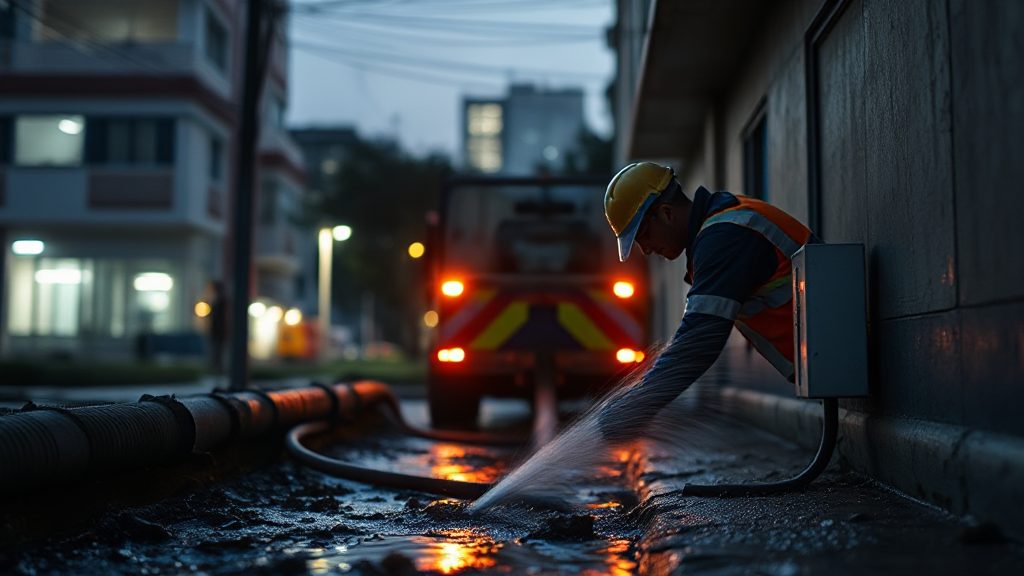
Night work in Itaim Bibi has a different rhythm. The streets are quieter, but the work area is darker. The crew sets up portable lights and uses cones or warning tape when working near a sidewalk or garage entrance. In buildings, the technician wears shoe covers and lays down protective mats to keep the common area dry. These details matter because a drain callout at midnight should not create a slip hazard or a mess for the building staff to clean up.
Safety also means knowing when to stop. If the camera reveals a collapsed pipe or a root intrusion that requires excavation, the crew does not force the machine through it. Instead, the technician explains the finding, stabilizes the situation, and schedules a follow-up with the right equipment. A temporary fix that holds until morning is better than a rushed repair that damages the line.
The morning after: what the building learns
By 1 a.m., the drain is flowing and the technician is packing up. The report from the callout is short but useful: where the clog was, what caused it, and whether the line needs a follow-up cleaning. For the building manager, this is the moment to think about prevention. A recurring clog in the same branch usually points to a design issue, a grease trap that is not being maintained, or tree roots in the main line.
The morning after a night callout is also when neighbors compare notes. One apartment’s backup often reveals a shared problem that affects several units. Scheduling a preventive hydro-jetting of the main line, or a camera inspection of the branch, can avoid the next midnight call. The best night crews are not just fast; they leave behind enough information for the building to make a better decision the next day.
Frequently asked questions about night drain callouts in Itaim Bibi
How quickly can a desentupidora arrive at night in Itaim Bibi?
Arrival time depends on traffic, the technician’s location, and the building’s access rules. In most night calls, the crew aims to arrive within a short window after dispatch, but the dispatcher will give an estimate based on the current situation. Buildings with a concierge and a clear parking plan tend to speed up the process.
Does a night callout cost more than a daytime service?
Emergency services often have a different pricing structure because they involve after-hours labor and priority dispatch. The dispatcher should explain the callout fee and the estimated cost of the service before the crew arrives. For recurring problems, a scheduled preventive service during the day is usually more economical than repeated night calls.
What should I do while waiting for the crew to arrive?
Stop using water in the affected area, and avoid flushing toilets or running sinks that drain into the same line. If there is a risk of flooding, move valuables away from the floor and place towels at the drain. Do not pour chemical drain cleaners into a backed-up line; they can damage pipes and make the technician’s job harder.
Can the crew clear a clog without entering my apartment?
In many cases, yes. If the building has an accessible cleanout in a common area, the technician can work from there. However, if the clog is local to a fixture inside the apartment, access will be needed. The dispatcher will ask about cleanout locations when the call is placed.
Why the night shift matters for Itaim Bibi buildings
A drain backup does not wait for business hours, and in a dense neighborhood like Itaim Bibi, a single blocked line can affect multiple units before morning. The value of a 24h crew is not just the machine or the speed; it is the ability to diagnose under pressure, protect the building’s common areas, and leave a clear record of what happened. When the next call comes, the building has a better starting point.
For residents and managers, the lesson is simple: know where the cleanouts are, keep a number for a trusted crew, and treat a slow drain as a warning rather than a minor annoyance. The callout described here ended with a flowing drain and a short report, but the real work continues in the morning, when the building decides whether to prevent the next midnight emergency.